
Reviewed · OLD SAN JUAN WALKING TOURS
Old San Juan Tour in Spanish
Old San Juan’s story makes the most sense on foot. This Spanish-language walking tour links the city’s walls, churches, forts, plazas, and narrow streets in about two hours, beginning near Plaza Colón and ending by the Capilla del Santo Cristo de la Salud.
I like the chance to explore with Daniel Rivera Viruet, a guide praised for his calm manner, clear explanations, and care for the group’s comfort. I also like the price: $30 covers a focused introduction to a 500-year-old city, with plenty of time afterward to enter the forts or stop for lunch.
The main consideration is the language and pace. The 12:30 p.m. departure is in Spanish, while English usually starts at 9:30 a.m. by advance arrangement. You will also walk over cobblestones and hills in the midday sun, and the two castles are viewed from outside.
In This Review
- Key points to know before booking
- Why this Spanish Old San Juan walk works
- Plaza Colón explains the city’s purpose
- San Francisco de Asís and the city’s working churches
- San Cristóbal, San Sebastián, and the Puerto Rican flag
- San José and a cemetery by the sea
- Ballajá brings a practical pause
- El Morro and the entrance to San Juan Bay
- Quinto Centenario and a view toward the bay
- Calle de la Fortaleza ends the walk in the right place
- What $30 gets you
- Who should book this tour
- Should you book the Spanish Old San Juan tour?
- FAQ
- What language is the 12:30 p.m. tour in?
- Where does the tour start?
- How long does the walking tour last?
- Does the tour enter Castillo San Cristóbal or El Morro?
- Are church interiors included?
- How much does the tour cost?
- What happens if I need to cancel?
Key points to know before booking
- Spanish at 12:30 p.m.: This is the regular Spanish departure, with English availability checked by message before booking.
- Daniel Rivera leads the walk: He is praised for his good humor, patience, and attention to group comfort.
- Two major forts remain outside: You learn about Castillo San Cristóbal and Castillo San Felipe del Morro, but admission is not included.
- A city-wide route in two hours: The walk connects Plaza Colón, San Sebastián Street, the old walls, La Rogativa, and Calle de la Fortaleza.
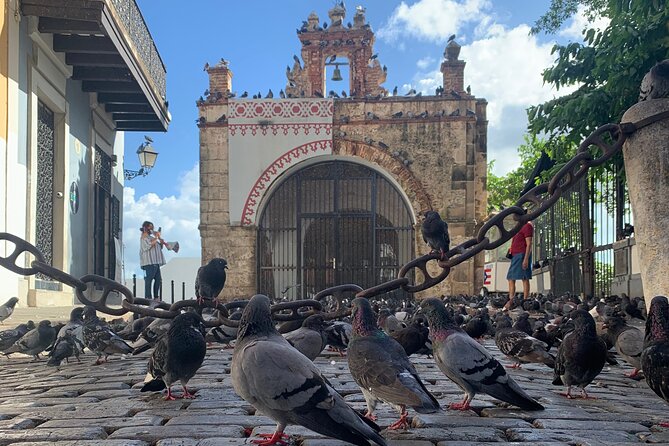
- Church interiors depend on conditions: San Francisco de Asís, San José, and the oldest church may be entered only when few people are inside and worship is not disturbed.
- Bring sun protection: You should expect a moderate amount of walking on cobblestones, with a bathroom stop at Cuartel de Ballajá if available.
Why this Spanish Old San Juan walk works
Old San Juan is easy to admire and surprisingly easy to misunderstand. Blue cobblestones, painted facades, church towers, and thick stone walls can look like a pretty film set unless someone explains why the city was built where it was and why Spain fortified it so heavily.
This tour gives you that framework. You begin with the reason for a walled city in the 1500s, then follow the defenses and civic spaces toward the bay. The route is not only about dates. It connects military planning, religion, colonial architecture, Puerto Rican symbols, and the legends attached to particular streets and monuments.
The Spanish format is the heart of the experience. If Spanish is your first language, or if you understand it well enough to follow a history talk, you get the city explained in the language most comfortable for you. The tone can also feel more personal and natural than a large, formal presentation.
Daniel Rivera’s approach suits this setting. He is described as attentive and steady, checking that people are comfortable, pausing for questions, and explaining the city with enthusiasm. That matters on a walking tour. A guide who keeps moving without checking the group can turn a beautiful old city into a tiring march.
The group can reach as many as 20 people. That is small enough for a more personal walk, though not the same as a private tour. If you want to ask questions, do it during the stops rather than saving everything for the end.
More old san juan walking tours in San Juan:
- Old San Juan Walking Tour
★ 5.0 · 2,211 reviews - Old San Juan City Walking Tour
★ 5.0 · 1,718 reviews - Historic Old San Juan Sunset Walking Tour
★ 5.0 · 634 reviews
Plaza Colón explains the city’s purpose
The walk begins at Plaza Colón, where you get a short introduction to Old San Juan and the reason Spain built a walled city in the 1500s. This opening gives the rest of the route a clear purpose.
Old San Juan was not simply a settlement with attractive colonial buildings. Its position at the entrance to San Juan Bay made it important to Spain and exposed it to attacks from pirates and privateers. The walls and forts were built to protect the port and the city behind it.
The meeting information also gives the address 407 C. de San Francisco. Since the route description names Plaza Colón as the starting point, confirm the exact meeting spot when you book so you are not searching for the group at midday.
San Francisco de Asís and the city’s working churches
Parroquia San Francisco de Asís dates to 1756. It is one of the early reminders that Old San Juan was a lived-in city, not only a military outpost.
You may enter the church if it is empty or nearly empty. The guide will not interrupt worship, so an interior visit is never guaranteed. I see that as a sensible limit, but you should understand that the tour may cover the church from outside if services or prayer are taking place.
This stop also shows how the walk balances history with respect for the present. Old San Juan’s churches still serve religious communities. You are seeing active places of worship, not museum displays.
San Cristóbal, San Sebastián, and the Puerto Rican flag

The exterior of Castillo de San Cristóbal is next. It is described as the largest castle built in the Americas for the defense of a city. The tour explains its military role, but does not enter the fort.
That distinction matters when you plan your day. Admission to the castle costs extra, and you can visit it after the walking tour. The same arrangement applies to El Morro later in the route. The tour is an orientation to the fortifications, not a substitute for exploring their tunnels, walls, and interior rooms.
From there, the walk continues along Calle San Sebastián. The cobblestones and colorful buildings make this one of the most recognizable streets in Old San Juan, but the guide adds a local point of reference: San Sebastián Street hosts Puerto Rico’s largest festival in January.
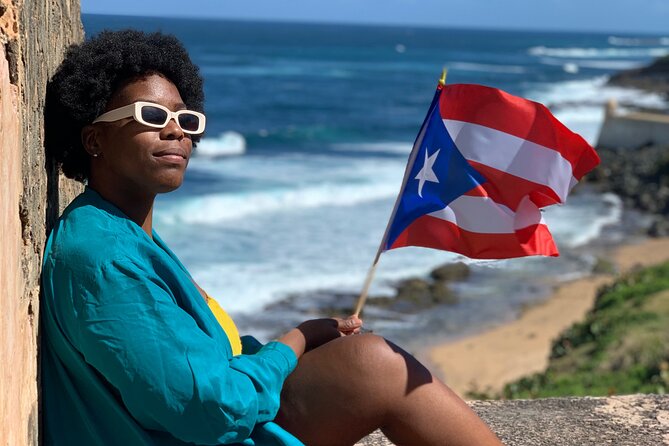
You then reach La Puerta de la Bandera, a useful stop for understanding Puerto Rican identity. Here you learn about the Puerto Rican flag and the changes it has gone through. It is also a natural place for photographs, so have your phone ready.
Same island, a completely different day out:
- San Juan Guided Snorkel With Turtles Tour and Videos
★ 5.0 · 12,947 reviews - Top Rated El Yunque Rainforest & Waterslide – SmallGroup Tour
★ 5.0 · 12,789 reviews - Night Kayak – Condado City Lights Tour
★ 4.5 · 4,807 reviews - Authentic Flavors of San Juan Food Tour
★ 5.0 · 4,741 reviews
San José and a cemetery by the sea
Iglesia de San José dates to 1532 and is identified as the second-oldest church in Puerto Rico. Again, entry depends on whether the church is quiet and whether entering would disturb people praying.
The route also includes the oldest church in Puerto Rico, dated to 1521, though the supplied tour information does not name it. You learn about its past and may enter only under the same respectful conditions. These church stops give the walk a stronger sense of continuity than an itinerary focused only on forts and viewpoints.
An old cemetery near the beach and Castillo del Morro adds another layer. Its position near the water and the defensive zone helps you see how tightly religion, daily life, burial customs, and military planning were packed together in the old city.
The exact length of this cemetery stop is not specified. The tour description does say you learn its history, so expect a short explanation rather than a separate cemetery visit.
Ballajá brings a practical pause
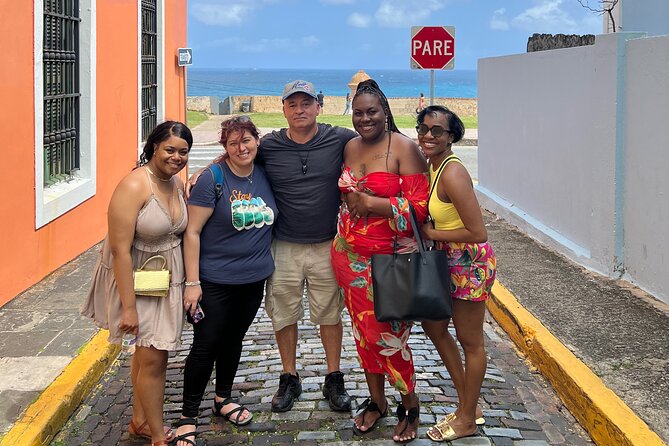
Cuartel de Ballajá was where Spanish soldiers lived. The building helps shift your attention from walls and weapons to the people who occupied the colonial city and maintained its defenses.
A bathroom stop may be available here. Treat it as a useful possibility, not a guarantee. With the tour scheduled for 12:30 p.m. and the walk lasting about two hours, this is also a good reminder to use facilities before meeting if you can.
The walk requires moderate physical fitness. Cobblestones, inclines, heat, and sun can make two hours feel longer than the number suggests. Wear shoes with a firm sole, use sunscreen, and bring water. The advice to wear a blocker, meaning sunblock, is practical.
El Morro and the entrance to San Juan Bay
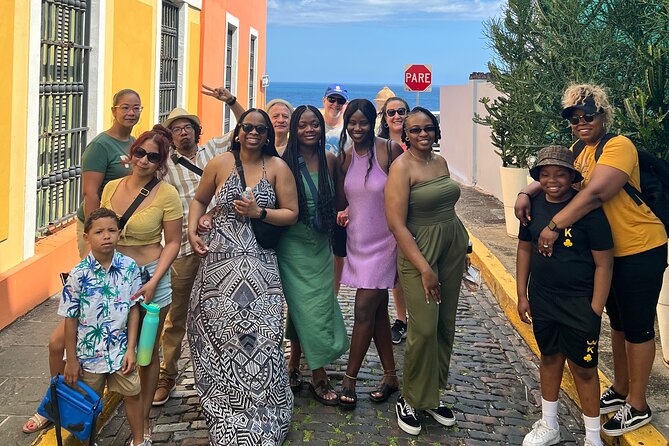
Castillo San Felipe del Morro, usually called El Morro, is one of the defining sights of the city. The fort was built in 1539 to defend the entrance to San Juan Bay, and the guide explains how it fit into the city’s defensive system.
You do not enter El Morro on this tour. Admission is extra, and you can visit after the walk. This can be a benefit if you prefer to get your bearings first, then return for a slower fort visit. It is a drawback if you have only a short stop in San Juan and hoped to see the interior as part of the $30 experience.
The route gives you context before you explore on your own. You will already know why the fort faces the bay, how it relates to the walls, and why the city’s position mattered. That can make a self-guided visit much easier to follow.
Quinto Centenario and a view toward the bay
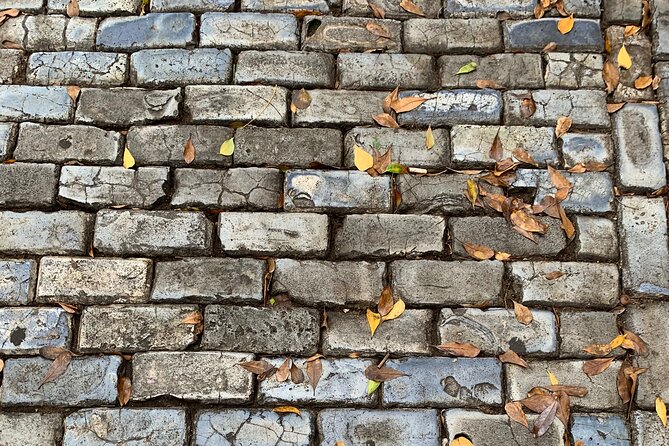
Plaza del Quinto Centenario was built in 1992 to mark 500 years since the discovery of America. Its centerpiece is the Telluric Totem, made by Puerto Rican artist Jaime Suárez.
This is a worthwhile pause because it adds modern Puerto Rican art to a route often dominated by Spanish colonial buildings. The plaza also gives the guide a chance to discuss the details and meaning attached to the monument.
At La Rogativa, the route opens toward San Juan Bay. You learn about the Rogativa and see part of the house connected with Juan Ponce de León. The view gives your walk a welcome change of scale after the close streets and heavy stone walls.
The house of Juan Ponce de León dates to 1521. You do not enter it during the tour, and admission is separate if you decide to visit later. The same is true of the historic church connected with the early city. The walking tour points you toward these places and gives you the background to decide which ones deserve more of your time.
Calle de la Fortaleza ends the walk in the right place
Calle de la Fortaleza is the main street of Old San Juan. It is lined with shops, restaurants, craft sellers, and galleries, making it a useful place to finish rather than a remote endpoint.
The final stop is Capilla del Santo Cristo de la Salud. You learn its history, then the formal tour ends nearby. From there, you can continue along Fortaleza Street for lunch, shopping, or more independent walking.
This ending is especially practical for a half-day visit. You do not need to arrange a ride back to a distant meeting point, and you can use the guide’s route as a first pass before deciding what to revisit.
What $30 gets you
At $30 per person, the value depends on what you want from Old San Juan. You are paying for about two hours with a guide who connects a large number of historic places into one clear story. You are not paying for admission to the two castles, the Ponce de León house, or other sites that charge an entrance fee.
I consider the price fair for a first look, especially if you want Spanish rather than English. A self-guided walk costs less, but you would need to research the walls, churches, forts, flag, festival, and monuments yourself. The guide’s role is to make those pieces fit together.
The tour is also a good choice if you want to save your admission fees for the sites that interest you most. After hearing about San Cristóbal and El Morro, you can choose one or both for a longer visit. Just allow extra time and budget for their entry charges.
The experience is booked about 13 days ahead on average, so do not assume you can wait until the last morning during a busy trip. Confirmation arrives at booking, and free cancellation is available until 24 hours before the start time. Poor weather or failure to meet the minimum group size can lead to a new date or a full refund.
Who should book this tour
You should consider it if you prefer learning in Spanish, want a guided introduction to Old San Juan, or have two hours to establish your bearings before exploring alone. It is also a good fit for anyone who values churches, city symbols, architecture, military history, and local stories in one walk.
The tour suits people with moderate mobility who can handle uneven cobblestones and some walking in the sun. Service animals are allowed, and the area is near public transportation.
You may want a different plan if your main goal is spending time inside El Morro or San Cristóbal. Since neither castle is entered, you would need to add those visits afterward. You might also prefer a private or smaller walk if a group of up to 20 feels too large.
Should you book the Spanish Old San Juan tour?
Book it if Spanish is important to you and you want Daniel Rivera to explain how the forts, churches, walls, plazas, and streets connect. The strongest parts are the language option, the broad route, the guide’s attentive manner, and the freedom to choose your own paid sights afterward.
Skip it if you only have time for a castle interior, dislike walking on cobblestones, or need an English tour at a fixed time. For a $30 introduction to the oldest city on Puerto Rico and one of the oldest cities in the Americas, this is a sensible, well-focused way to begin.
FAQ
What language is the 12:30 p.m. tour in?
The 12:30 p.m. tour is in Spanish. English usually begins at 9:30 a.m., but you must send a message before booking to check English availability.
Where does the tour start?
The meeting information gives 407 C. de San Francisco, San Juan, 00901, Puerto Rico. The route description identifies Plaza Colón as the starting place, so confirm the exact meeting point when booking.
How long does the walking tour last?
The tour lasts approximately two hours.
Does the tour enter Castillo San Cristóbal or El Morro?
No. The guide explains the history of both castles from outside. You can visit them afterward, and each has its own entrance fee.
Are church interiors included?
The churches may be entered only when they are empty or have few people inside. The guide will not interrupt people who are praying, so an interior visit is not guaranteed.
How much does the tour cost?
The price is $30 per person.
What happens if I need to cancel?
You can cancel at least 24 hours before the local start time for a full refund. Cancellations or changes made less than 24 hours in advance are not accepted for a refund. If bad weather or too few bookings cancels the tour, you are offered another date or a full refund.
Just added around San Juan
- Private Windsurf Experience in Puerto Rico★ 5.0 · 7 reviews
- eFoil Lesson Old San Juan★ 5.0 · 5 reviews
- “Unique Tour” Loiza, Cultue, Art & Bomba Dance Class on The Beach★ 5.0 · 22 reviews
- Window Cave and Indian Cave private tour with an archaeologist as guide★ 4.5 · 9 reviews
- Private Wellness Tour of Puerto Rico Waterfalls and Hot Springs★ 5.0 · 5 reviews
- Authentic San Juan Guided Walking Food Tour with Pina Colada★ 5.0 · 3 reviews
- El Yunque Rainforest- Water Slide, Luquillo Beach Guided Tour★ 4.5 · 29 reviews
- Private Transportation from San Juan to Dorado or VIceversa Puerto Rico SJU★ 4.0 · 4 reviews
Old San Juan Walking Tours, compared.


Old San Juan Bar Crawl: Experience Local Hotspots
Read our review →
Savor the Sunset: Old San Juan Walking Food Tour
Read our review →
Old San Juan Historical Walk, Shopping, and Dining w/ Transport
Read our review →Browse the lists this tour appears in