
Reviewed · FOOD & DRINK
Caribbean Food Experience
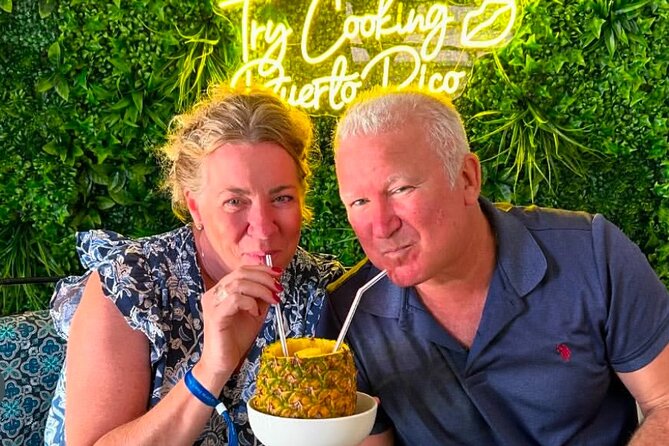
The best part of this two-hour food experience is its setting in Piñones, a coastal community away from San Juan’s busiest tourist streets. Chef Mauro teaches the basics of Puerto Rican cooking through plantains, sofrito, adobo, fresh pineapple, and pastry, with salsa music and plenty of time to eat what you make.
I like the relaxed format, which works for both hands-on cooks and people who would rather watch with a piña colada. I also like the small group limit of 12 people, giving the class a friendly, personal feel. The main consideration is location: you meet in Piñones, not central San Juan, so check your transport plans before booking.
In This Review
- Key points at a glance
- Why Piñones makes the setting part of the experience
- Meeting chef Mauro in the kitchen
- Starting with piña coladas and island ingredients
- Making sofrito and chicken in mofongo cups
- Building tostones baskets and quesitos
- Sitting down to a generous tasting meal
- What the $89 price includes in practical terms
- Who will enjoy this class most
- Dietary needs and practical planning
- How this compares with a regular Puerto Rican meal
- Should you book the Piñones cooking experience?
- FAQ
- Where does the Caribbean Food Experience begin?
- Where does the activity end?
- How long does the cooking experience last?
- How much does the experience cost?
- How many people can join the class?
- What foods and drinks will I prepare?
- Is the class suitable for beginners?
- What happens if bad weather cancels the experience?
Key points at a glance
- Cook with chef Mauro: Expect clear, patient instruction with room to ask questions and laugh along the way.
- Make more than one dish: The session covers piña coladas, sofrito, tostones baskets, quesitos, and Puerto Rican-style mofongo cups.
- Taste island staples: You’ll work with plantains, adobo, sofrito, chicken, guava, pineapple, and other familiar local ingredients.
- Choose your level of participation: Roll up your sleeves or sit back, sip a drink, and enjoy the meal.
- Small coastal setting: The class takes place in Piñones, a useful change of pace from San Juan’s central tourist areas.
- Good value for a short class: At $89 per person, the price includes instruction, cooking, drinks, and generous tastings during a two-hour session.
Why Piñones makes the setting part of the experience
Piñones is in the municipality of Loíza, just outside the core of San Juan. The meeting point is Try Cooking Puerto Ricolado, opposite the Centro Comunal Piñones, on PR-187. The activity ends at that same location.
That detail matters. This is not a class tucked into a hotel kitchen in Condado or Old San Juan. It takes you toward a community better known for local food and a coastal atmosphere. If you want a break from polished tourist districts, the location helps give the class a more grounded feel.
The trade-off is simple: the tour does not begin in central San Juan, and the supplied details do not include hotel pickup or transportation. You should plan how you’ll reach PR-187 before booking. Since the class lasts about two hours and returns to its starting point, it is easy to fit into a day if your transport is sorted.
A few more San Juan trips to weigh up
- Old San Juan Historical Walk, Shopping, and Dining w/ Transport
★ 4.5 · 381 reviews - FlyDining: Sunset & City Lights Dinner Over Old San Juan
★ 4.5 · 326 reviews - FlyDining: 4 Courses Dinner with City Lights & Ocean Breeze
★ 4.5 · 71 reviews
Meeting chef Mauro in the kitchen
Chef Mauro is the main reason this class feels more like a personal food lesson than a formal demonstration. He keeps the tone easygoing and beginner-friendly, so you do not need serious kitchen experience. The focus is on learning a few useful Puerto Rican methods and ingredients, not on testing your knife skills.
The class introduces sofrito, the aromatic base used in many Puerto Rican dishes. You also learn about adobo and plantains, two building blocks of the island’s cooking. These are valuable lessons because they explain the flavor behind the food, rather than simply placing a finished plate in front of you.
Mauro’s approach also suits families and mixed-ability groups. You can take part at your own pace. Some people may want to help prepare each item, while others may prefer to watch, ask questions, and concentrate on tasting. There is no pressure to perform.
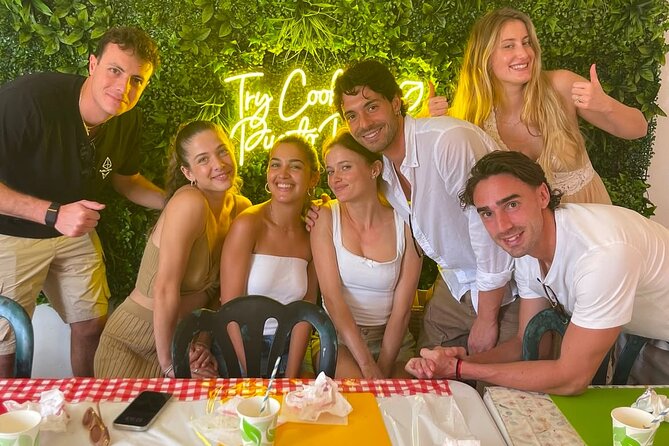
The maximum group size is 12 people. That is small enough to keep the session social without making it feel like a private class. It also gives you a better chance to follow along than you would in a large cooking demonstration.
Starting with piña coladas and island ingredients
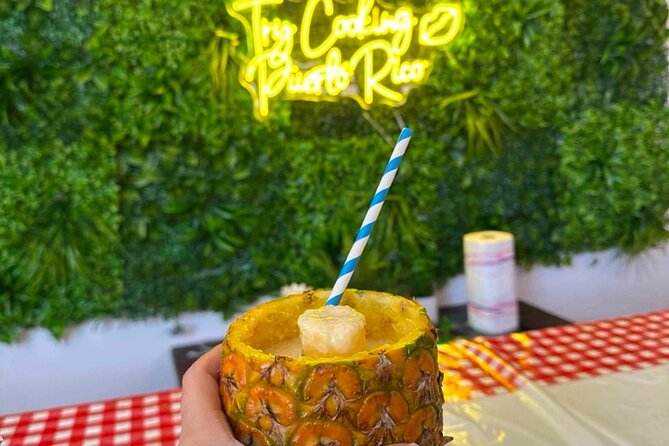
The food lesson includes preparation of piña coladas, made with fresh pineapple according to the experience details and the food notes provided. This is a nice opening because the drink gives you something to enjoy while the cooking gets underway.
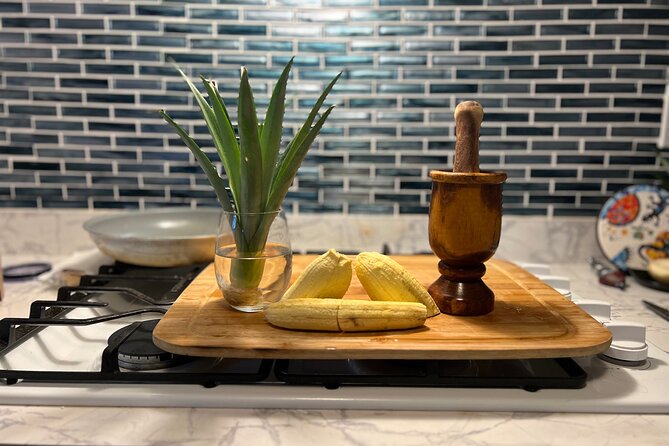
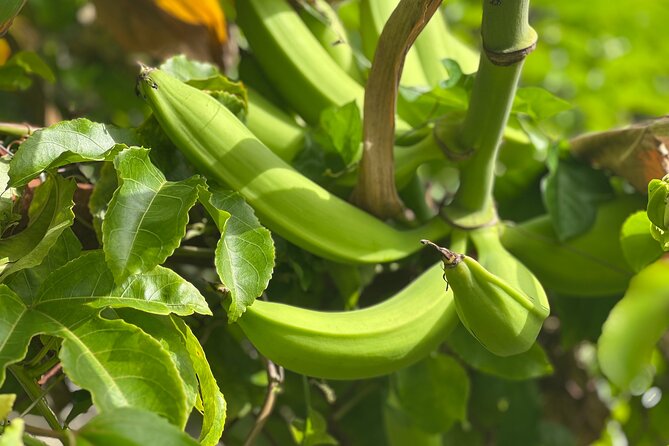
You also get an introduction to basic Puerto Rican ingredients. Plantains can be unfamiliar if you mainly know bananas, and the class shows how they become savory food rather than a sweet snack. Sofrito and adobo help explain why many island dishes have such a strong, layered taste even when the ingredient list looks straightforward.
The drink portion adds value to the $89 price. You are not paying only for a recipe demonstration. You are also receiving a prepared beverage, food tastings, instruction, and a social meal in a small group.
Keep in mind that this is a two-hour activity. You will get a useful introduction to several dishes, but you should not expect a long, advanced culinary course with every step covered in professional detail. The appeal is variety and participation.
Making sofrito and chicken in mofongo cups
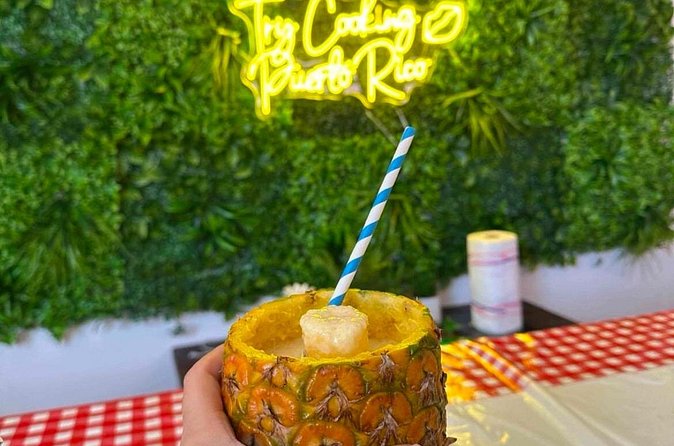
Sofrito is one of the most important stops in the lesson. Learning how this seasoned base comes together gives you something practical to remember after your Puerto Rico trip. It is the sort of preparation that can help you understand many dishes you encounter around the island.
The class also includes chicken served in mofongo cups. Mofongo is made from mashed plantains, and the cup shape turns it into a useful base for a savory filling. This preparation lets you see how a humble ingredient becomes the center of a substantial dish.
The combination of sofrito, chicken, and plantains gives the session a good balance. You are not simply preparing a sweet snack or assembling a garnish. You are working with the flavors and textures that make Puerto Rican food distinct.
Plantains can be a sticking point for some people. If you are not usually a fan, the preparation may change your mind because the marinade and mofongo-style presentation make the plantain more savory and substantial. Still, anyone who dislikes plantains should know they are central to the class rather than a minor side dish.
Same island, a completely different day out:
- San Juan Guided Snorkel With Turtles Tour and Videos
★ 5.0 · 12,947 reviews - Top Rated El Yunque Rainforest & Waterslide – SmallGroup Tour
★ 5.0 · 12,789 reviews - Night Kayak – Condado City Lights Tour
★ 4.5 · 4,807 reviews - Authentic Flavors of San Juan Food Tour
★ 5.0 · 4,741 reviews
Building tostones baskets and quesitos
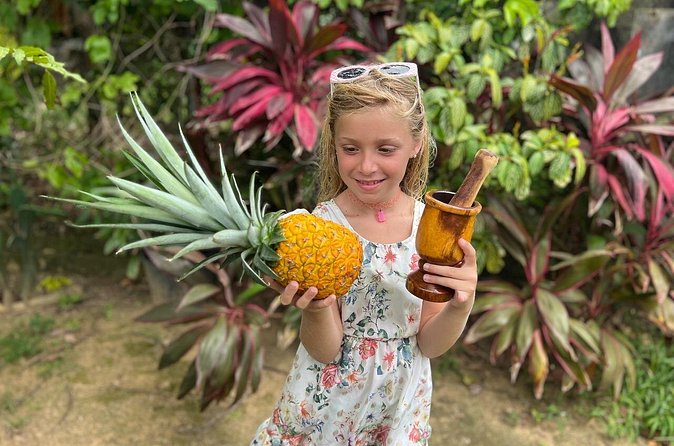
Tostones are green plantains that are fried, flattened, and prepared as a crisp savory food. Here, you learn to make tostones baskets, which give the plantain a more playful shape and create a vessel for other ingredients.
This is one of the more hands-on parts of the class. You get to see how a simple ingredient changes through cooking and shaping. The technique is more useful than a quick tasting because it gives you a method you might try again at home.
Quesitos provide the sweet side of the menu. These Puerto Rican pastries are commonly associated with cream cheese filling and a flaky pastry exterior. The class pairs them with a guava pastry treat, giving you a taste of the island’s love of sweet, creamy, and fruit-filled desserts.
The menu works well because it covers several textures: crisp tostones, soft plantain, savory chicken, creamy filling, flaky pastry, and a cold fruit drink. You get a broader picture of Puerto Rican food than you would from a single restaurant dish.
Sitting down to a generous tasting meal
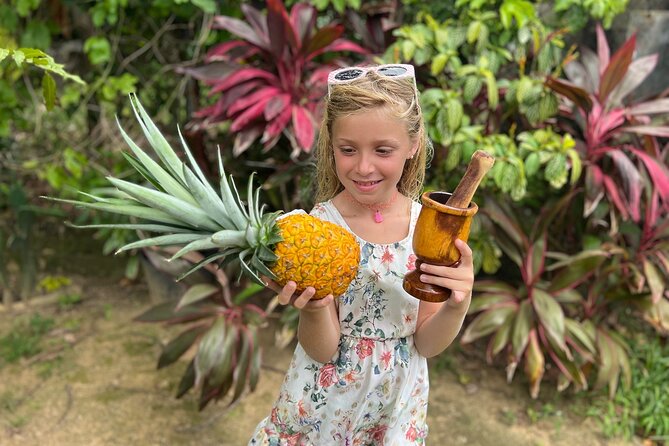
The meal is not an afterthought. You prepare the food and then get to eat it, which makes the session feel complete rather than like a cooking show with a few token samples.
Expect classic Puerto Rican flavors in a casual setting. The combination can include sofrito with chicken in mofongo cups, tostones baskets, quesitos, guava pastry, and a freshly made piña colada. Exact portions and preparation may vary, but the experience is designed around substantial tastings rather than one tiny bite of each item.
This format is especially good if you are traveling with someone who loves food but does not want a long formal class. You can learn a few techniques, enjoy lunch or a generous snack, and spend time talking with the host and other members of the group.
The relaxed pace also helps if you are new to Puerto Rican cuisine. You can ask what an ingredient is, how it is used, and why a dish is prepared in a certain way. The food comes with context, which is often what makes a cooking class worth doing.
What the $89 price includes in practical terms
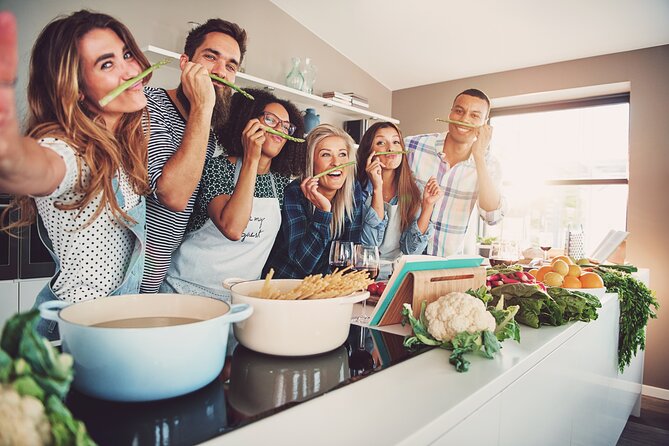
At $89 per person, this is not the cheapest way to eat in Puerto Rico. A local meal alone can cost much less. The price makes more sense when you count the instruction, the cooking activity, the piña colada, several prepared foods, and the chance to spend time with a local chef.
You are also paying for access to a setting and format you may not find by simply walking into a restaurant. The class connects the ingredients to the cooking process. That is the key difference between this and a regular lunch.
For a two-hour activity, the value is strongest if you take part fully. Help prepare the sofrito, shape the plantains, watch the pastry work, and ask questions. If you only want to sit and eat, you may find the price harder to justify, although the option to relax with a drink is useful for mixed groups.
The small group limit adds another practical benefit. With no more than 12 participants, the session should feel more personal than a large food tour. It is a reasonable choice for couples, families, and friends who want an activity built around conversation.
Who will enjoy this class most
I would recommend this experience to:
- First-time visitors who want an introduction to Puerto Rican food
- Couples looking for a relaxed activity outside central San Juan
- Families who enjoy preparing and eating food together
- Beginners who want instruction without a formal culinary-school atmosphere
- People who like plantains, pastries, tropical fruit, and rum-based drinks
- Anyone who wants a local food activity rather than another standard restaurant meal
It can also work for a group with different interests. One person can cook, another can take notes, and another can simply enjoy the tasting. The experience is built to allow that flexibility.
You may want to skip it if you want an advanced class, a long market visit, or a full-day food tour. It is also less convenient if your schedule keeps you near Old San Juan and you do not want to arrange transport to Piñones.
Dietary needs and practical planning
A service animal is allowed. The experience requires good weather, so poor conditions can lead to a different date or a full refund.
One participant’s gluten-free needs were accommodated with a gluten-free dessert. That is encouraging, but you should contact Try Cooking San Juan before booking if you have celiac disease, a serious allergy, or another strict dietary requirement. The available details do not promise a fully gluten-free menu or separate preparation area.
The meeting point is specific: Try Cooking Puerto Ricolado opposite Centro Comunal Piñones, PR-187, Carolina, Loíza 00772, Puerto Rico. Save the address and allow enough time to reach Piñones. The activity ends at the meeting point, so you will not need to arrange a second pickup location.
Mobile tickets make entry simple. Confirmation is provided at booking. Free cancellation is available if you cancel at least 24 hours before the start time. Changes or cancellations made inside that window are not refunded, except when poor weather causes the operator to cancel.
How this compares with a regular Puerto Rican meal
A restaurant meal gives you a finished dish and a chance to observe local dining habits. This class gives you the background behind the food. You learn what sofrito does, how plantains are treated, and how a simple pastry or drink fits into the wider food culture.
I like that the menu includes both savory and sweet items. A tour focused only on mofongo might leave you with one strong impression. This session gives you a wider sample, from tostones and chicken to quesitos, guava, and pineapple.
The class also creates a shared activity. If you are traveling with your mother, partner, or children, you can work side by side instead of sitting across a table waiting for food. That shared effort is a big part of the appeal.
Still, a class cannot replace eating at a good local restaurant. If your main goal is to sample many dishes made by professionals, spend your money on several small meals instead. Choose this experience for the cooking, the host, and the chance to understand the food.
Should you book the Piñones cooking experience?
Book it if you want a friendly, local food lesson with a short time commitment. Chef Mauro’s patient style, the small group size, and the broad menu make this a strong choice for beginners and curious eaters.
The best reason to book is the mix of participation and tasting. You will not spend two hours only watching someone else cook, and you will not be rushed through a single dish. You get drinks, savory food, dessert, and a look at the ingredients that shape Puerto Rican cooking.
Before paying, confirm your route to Piñones and discuss any strict dietary needs. If those details work for you, the $89 cost is fair for a two-hour class with food and drinks included. I would choose it for a relaxed San Juan day when you want something personal, tasty, and different from the usual city sightseeing.
FAQ
Where does the Caribbean Food Experience begin?
It begins at Try Cooking Puerto Ricolado, opposite Centro Comunal Piñones, on PR-187 in Carolina, Loíza 00772, Puerto Rico.
Where does the activity end?
The activity ends back at the meeting point in Piñones.
How long does the cooking experience last?
The experience lasts approximately two hours.
How much does the experience cost?
The listed price is $89 per person.
How many people can join the class?
The activity has a maximum of 12 participants.
What foods and drinks will I prepare?
You will learn to make piña coladas, sofrito, tostones baskets, and quesitos. The food experience also includes Puerto Rican dishes such as chicken in mofongo cups and a guava pastry treat.
Is the class suitable for beginners?
Yes. The experience is described as beginner-friendly, and you can take part in the cooking or sit back and enjoy the tasting.
What happens if bad weather cancels the experience?
If poor weather causes a cancellation, you will be offered a different date or a full refund.
More Food in San Juan
- El Yunque Waterslide and Waterfall Tour with Food and Photos
★ 4.5 · 1,215 reviews - Savor the Sunset: Old San Juan Walking Food Tour
★ 5.0 · 559 reviews - Morning Old San Juan Food Tour
★ 5.0 · 233 reviews - El Yunque Hike, Waterslide & Luquillo Kiosks Food with Transport
★ 5.0 · 70 reviews
Just added around San Juan
- Private Windsurf Experience in Puerto Rico★ 5.0 · 7 reviews
- eFoil Lesson Old San Juan★ 5.0 · 5 reviews
- “Unique Tour” Loiza, Cultue, Art & Bomba Dance Class on The Beach★ 5.0 · 22 reviews
- Window Cave and Indian Cave private tour with an archaeologist as guide★ 4.5 · 9 reviews
- Authentic San Juan Guided Walking Food Tour with Pina Colada★ 5.0 · 3 reviews
- El Yunque Rainforest- Water Slide, Luquillo Beach Guided Tour★ 4.5 · 29 reviews
- Private Wellness Tour of Puerto Rico Waterfalls and Hot Springs★ 5.0 · 5 reviews
- Private Transportation from San Juan to Dorado or VIceversa Puerto Rico SJU★ 4.0 · 4 reviews
Food & Drink, compared.
El Yunque Waterslide and Waterfall Tour with Food and Photos
Read our review →
Rum Tasting Tour at Casa BACARDÍ in Puerto Rico
Read our review →
Savor the Sunset: Old San Juan Walking Food Tour
Read our review →
Ron del Barrilito Rum Tasting Skip-the-Line Tour
Read our review →
Bio Bay Magic and Rum Tasting Tour from San Juan
Read our review →
Christmas Vibe: Old San Juan Pitorro Rum Tasting Experience
Read our review →Browse the lists this tour appears in