
Reviewed · WALKING TOURS
Cacao Walking Tour in Puerto Rico
Fresh cacao fruit tastes nothing like a chocolate bar. At Finca La Providencia in Moca, you follow hillside paths through a working 20-acre farm, watch a cacao harvest, and learn how a flower becomes a bean and then a bar. I especially like the hands-on tasting and the clear look at organic farm methods.
I also like the easygoing family feel. Children as young as 5 and adults up to 70 have taken part, and guides have explained the tour in Spanish for adults and English for children. The main consideration is the uneven farm setting, so you should have moderate physical fitness and expect a walk rather than a seated tasting.
In This Review
- Key points at a glance
- Walking into Finca La Providencia in Moca
- Seeing how cacao grows from flower to fruit
- Contour farming, worm tea, and organic compost
- From cacao bean to chocolate bar
- Why the tasting works for families
- Is $35 a fair price?
- What to bring and how to plan the visit
- Who will enjoy this cacao tour most?
- Should you book Finca La Providencia?
- FAQ
- Where does the cacao walking tour take place?
- How long does the experience last?
- What is included in the price?
- Will I taste fresh cacao fruit?
- Is the tour suitable for children?
- How many people can join the tour?
- Can I cancel for a full refund?
Key points at a glance
- Fresh cacao fruit from the tree: You taste cacao at its fruit stage, before fermentation and chocolate-making change its flavor.
- A real 20-acre working farm: The walk covers contour farming, organic compost, and worm tea rather than focusing only on finished sweets.
- Bean-to-bar tasting: You sample chocolate at different cacao percentages, including 65% and 75% dark chocolate.
- A family-friendly pace: The walk is described as manageable for children and older adults, with language support noted in Spanish and English.
- A $35 farm experience: Bottled water, snacks, tastings, and a guide are included, while chocolate bars are available to buy separately.
Walking into Finca La Providencia in Moca
Your visit starts at Finca La Providencia, located at Carr 4419 km 1.2 in Moca, Puerto Rico. The activity begins and ends at the farm, so you do not need to arrange a second meeting point or worry about being left somewhere else after the tasting.
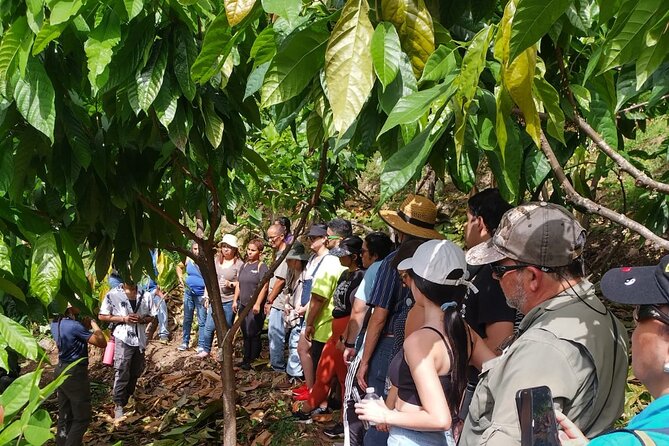
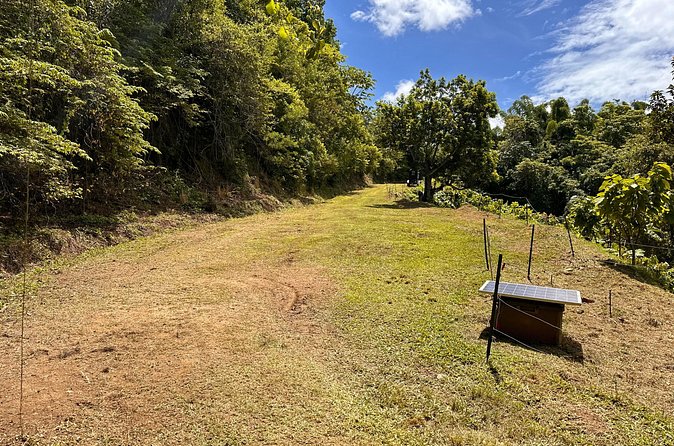
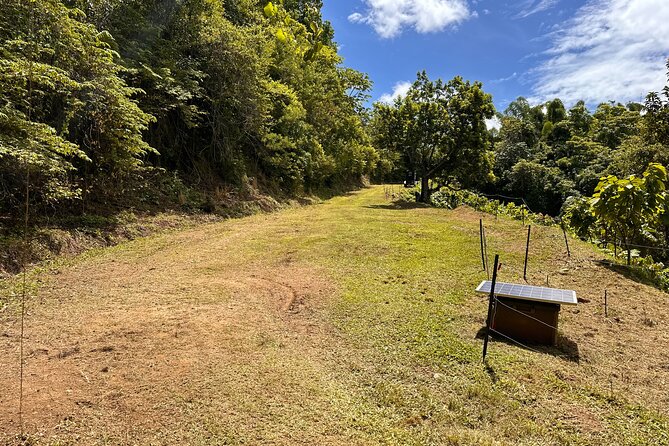
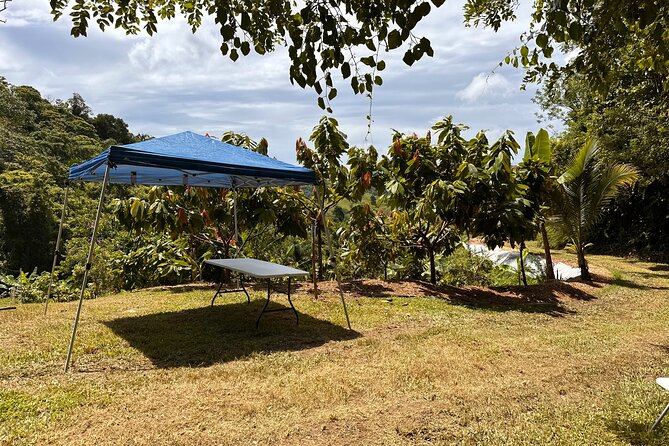
The setting matters here. This is not simply a chocolate presentation in a shop. You walk through a 20-acre cacao farm and see the plants in the place where they are grown. The hillside paths have been prepared for the tour, but this remains a farm visit, not a fully paved attraction.
The advertised experience lasts about 2 hours and 30 minutes, while the farm stop is also described as a two-hour visit. I would plan for roughly two to two and a half hours on site, with a little flexibility. That gives you enough time to walk, listen, taste, and ask questions without treating the farm like a quick photo stop.
The group can include up to 30 people. That is large enough to give the farm a lively feel, but small enough for a guide-led walk rather than a distant demonstration. If you prefer private attention, a group of 30 may feel less personal. Still, the in-person format should give you a chance to follow the explanation and see the plants at close range.
A few more Puerto Rico trips to weigh up
- Old San Juan Walking Tour
★ 5.0 · 2,211 reviews - Old San Juan City Walking Tour
★ 5.0 · 1,718 reviews - San Juan: Old Town Sunset Walking Tour
★ 4.7 · 636 reviews
Seeing how cacao grows from flower to fruit
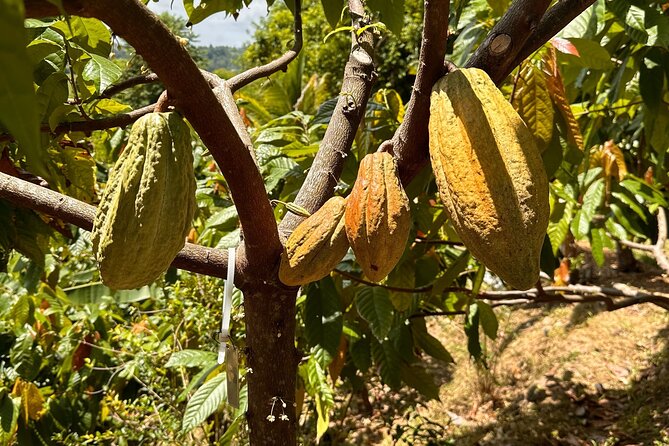
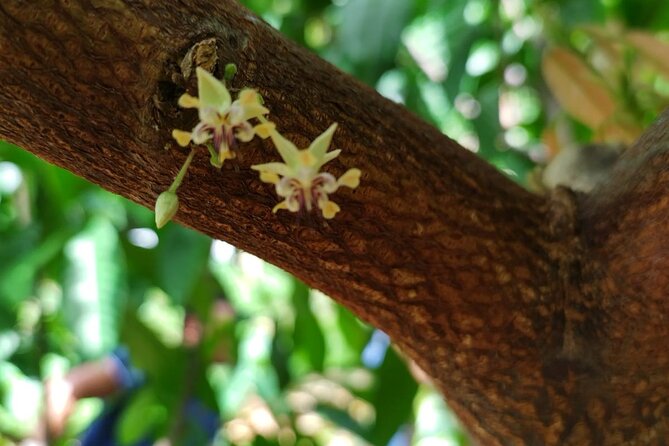
The first major lesson is the cacao life cycle. Farm attendants explain the stages from the delicate flower to the mature fruit, giving you a better sense of how much happens before anyone grinds a bean or melts chocolate.
That basic context changes the way you taste cacao. Most people meet cacao only after it has been roasted, sweetened, and formed into a bar. Here, you get to consider the fruit itself and see the raw material before it becomes familiar chocolate.
A live harvesting demonstration is part of the visit. The exact harvest on your date will depend on farm conditions, but the demonstration gives the process a practical focus. You are not just hearing how cacao is collected. You are watching the farm attendants show how the fruit is handled.
The chance to taste cacao fruit straight from the tree is one of the strongest reasons to book. It is a rare contrast with the finished product, and it helps explain why chocolate tasting begins with more than cocoa percentage. Cacao has several stages, each with its own smell, texture, and flavor.
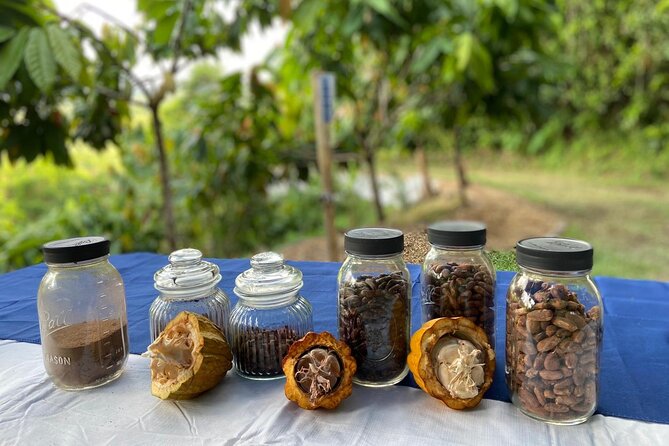
The farm also includes tasting and smelling activities at different points between bean and bar. I like this format because it turns an agricultural lesson into something you can test for yourself. If you are interested in food production, this part will likely be more memorable than a standard chocolate sampling.
Contour farming, worm tea, and organic compost
Finca La Providencia also puts attention on how the farm is maintained. You learn about contour farming, a method used on sloping ground by preparing planting lines along the shape of the hillside. The point is to work with the slope rather than simply sending water and soil downhill.
You also see how the farm prepares worm tea and manages organic compost. These details may sound less exciting than hot chocolate, but they are useful if you want to understand sustainable farming as daily work. The tour connects the final chocolate sample to soil care, plant maintenance, and the repeated labor required before harvest.
I would pay close attention during this section if you are comparing cacao tours in Puerto Rico. Many food tours focus almost entirely on tasting. This one gives you a closer look at the farm systems behind the product, including processes that are easy to miss when you see only a packaged bar.
The practical drawback is that farm systems are explained outdoors and along hillside walkways. If you dislike walking on uneven ground, have limited mobility, or are looking for a climate-controlled chocolate class, this may not be the right fit. The stated fitness level is moderate, and that should guide your decision.
From cacao bean to chocolate bar
The bean-to-bar explanation ties the visit together. You learn how cacao changes from fruit to bean, then through the stages that lead to chocolate. The supplied information does not specify every processing step or the length of each stage, so you should view this as an accessible overview rather than a full production course.
That is still useful. A good introduction lets you understand why two chocolates made from different cacao percentages can taste so different. It also gives you a framework for judging chocolate later in your trip, when you see local bars or other Puerto Rican cacao products for sale.
The tasting includes single-source fine dark cacao at different percentages, with 65% and 75% cacao specifically included. You can expect the higher-percentage sample to offer a more pronounced cacao character, though the exact balance of bitterness and sweetness will depend on the chocolate itself.
You also receive chocolate pieces and hot chocolate. The hot chocolate gives the tasting a softer, more familiar finish after the darker samples. Cacao-husk tea adds another useful comparison, since it uses the husk rather than the bar and has an aromatic profile of its own.
Bottled water and snacks are included. That is a small but welcome detail during a farm walk, especially if you are visiting with children. Lunch and breakfast are not included, so schedule the tour around your meals rather than expecting it to replace one.
Same island, a completely different day out:
- San Juan Guided Snorkel With Turtles Tour and Videos
★ 5.0 · 12,947 reviews - Top Rated El Yunque Rainforest & Waterslide – SmallGroup Tour
★ 5.0 · 12,789 reviews - Half-Day Yunque Rainforest Waterslide & rope swing Guided Tour
★ 5.0 · 6,534 reviews - El Yunque Rainforest Waterslides and Luquillo Beach w/ Transport
★ 4.5 · 5,098 reviews
Why the tasting works for families
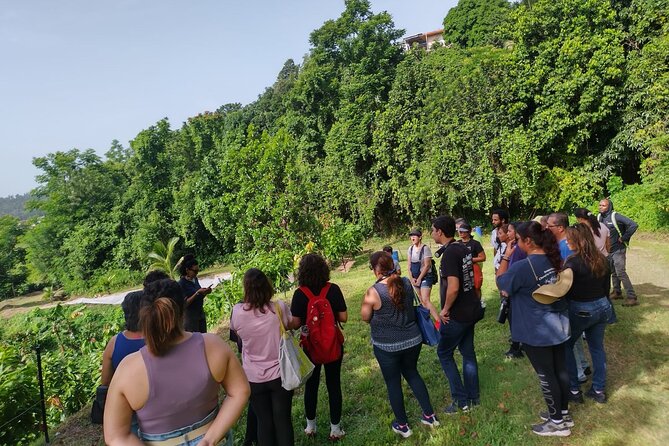
The family appeal is clear, but it is worth being precise. The walk has been handled by a family group ranging from children aged 5 to adults aged 70, and the route was described as not difficult. That does not mean every part of the farm will suit every child or older adult, but it does suggest that the experience is not built around strenuous hiking.
The language detail is especially helpful. Guides have explained the tour in Spanish for adults and English for children in one family group. The information does not promise a fixed bilingual schedule or name individual guides, so you should not assume a particular language arrangement on every date. Still, the farm has shown flexibility in serving mixed-language families.
Kids who like to taste unusual foods may get the most from the visit. Fresh cacao fruit, husk tea, hot chocolate, and dark chocolate offer several chances to compare flavors. Children who need constant activity may find the farming explanation slower, particularly during the compost and cultivation sections.
Older visitors should consider the hillside paths and the two-hour-plus duration. The walk is reported as manageable, but the activity is not described as wheelchair accessible, and no special mobility arrangements are provided. If you need those arrangements, contact the provider before booking.
Is $35 a fair price?
At $35 per person, I consider this a reasonable price for a two to two and a half hour guided farm visit. Your fee covers an in-person guide, bottled water, snacks, cacao-husk tea, fresh cacao and chocolate tastings, and the bean-to-bar explanation.
The value comes from the combination. A simple chocolate tasting might cost less, but it would not give you the farm walk, harvest demonstration, or look at contour farming and compost. A longer agricultural tour might offer more time in the field, but this one adds several finished chocolate samples and hot chocolate.
The price is less attractive if you mainly want to buy bars or drink hot chocolate. Those treats are part of the visit, but the main point is the farm and the explanation. Chocolate bars are available for purchase at the end, and you should bring cash if you want to buy some. The supplied information does not state that cards are accepted, so cash is the safer choice.
The experience is often booked about 18 days ahead. That is a useful planning signal, particularly if your Puerto Rico schedule is tight. I would reserve before your trip rather than assume you can fit it in at the last minute.
What to bring and how to plan the visit
Wear clothes and shoes suited to a farm walk. The tour takes place on hillside paths, and moderate fitness is required. The information does not give a specific dress code, so focus on comfort and steady footing rather than dressing for a formal tasting room.
Bring water if you prefer more than the included bottle, and consider carrying cash for chocolate bars. Since breakfast and lunch are not included, eat before or after the visit according to the start time.
The tour begins at the farm and returns there at the end. You are responsible for reaching Carr 4419 km 1.2 in Moca, so check your route carefully before setting out. No transportation from hotels or other Puerto Rico locations is included in the details provided.
Weather can affect the outing. The activity requires good weather, and a cancellation caused by poor conditions comes with the choice of another date or a full refund. You can cancel for a full refund up to 24 hours before the start time, but changes or cancellations inside that window are not accepted.
Who will enjoy this cacao tour most?
I would choose this experience if you want to connect Puerto Rican food with the place where it begins. It suits people who enjoy farms, local production, guided tastings, and practical explanations more than polished entertainment.
Families are a strong match, especially if children are curious about where chocolate comes from. The mixture of outdoor walking and tasting gives younger participants something concrete to look at and try, while adults can focus on farming methods and cacao percentages.
It also works well for chocolate fans who want more than a sugar rush. You get a chance to compare fruit, husk tea, hot chocolate, and dark chocolate, then understand how those forms relate to one another.
I would hesitate if you want a long hike, a full chocolate-making workshop, a meal, or a guaranteed private guide. The tour offers an introduction to cacao farming and bean-to-bar production, not a complete professional course. A group of up to 30 can also feel less intimate than a small family tour.
Should you book Finca La Providencia?
Book it if you want a hands-on cacao visit with a real farm setting, a live harvest demonstration, and several ways to taste cacao. The 5 out of 5 rating from 34 reviews and a 100 percent recommendation record support the idea that the experience delivers well for its intended audience.
I would make it a priority for families, food-focused visitors, and anyone curious about sustainable farming in Puerto Rico. The strongest moments are likely to be tasting fruit from the tree and comparing the 65% and 75% chocolates after seeing how cacao is grown.
Skip it if uneven paths, outdoor heat, or a two-hour-plus walking activity will make you uncomfortable. For most visitors who can handle a moderate farm walk, $35 is a fair price for the mix of agriculture, tasting, and local food education.
FAQ
Where does the cacao walking tour take place?
The tour takes place at Finca La Providencia, Carr 4419 km 1.2, Moca, Puerto Rico 00676. It begins and ends at the same farm.
How long does the experience last?
The experience lasts approximately 2 hours and 30 minutes. The farm visit is also described as lasting two hours, so you should allow roughly two to two and a half hours.
What is included in the price?
The $35 price includes bottled water, snacks, an in-person guide, cacao-husk tea, and tastings of single-source dark cacao at different percentages. Bean-to-bar chocolate bars are available for purchase separately.
Will I taste fresh cacao fruit?
Yes. The tour includes a live cacao harvesting demonstration and the opportunity to taste cacao fruit directly from the tree.
Is the tour suitable for children?
The tour has accommodated children from age 5, as well as adults up to age 70. The walk is described as not difficult, but participants should have a moderate physical fitness level.
How many people can join the tour?
The activity accepts a maximum of 30 participants.
Can I cancel for a full refund?
Yes. You can cancel at least 24 hours before the start time for a full refund. Poor weather or failure to meet the minimum number of participants may also lead to a rescheduled experience or full refund.
Just added around Puerto Rico
- CLEAR BOTTOM KAYAKS Tour in Bioluminescent, Mosquito Bay★ 4.0 · 30 reviews
- Private Windsurf Experience in Puerto Rico★ 5.0 · 7 reviews
- Private Tour of the White Canyon Ancestral Route in Utuado★ 5.0 · 7 reviews
- eFoil Lesson Old San Juan★ 5.0 · 5 reviews
- “Unique Tour” Loiza, Cultue, Art & Bomba Dance Class on The Beach★ 5.0 · 22 reviews
- Window Cave and Indian Cave private tour with an archaeologist as guide★ 4.5 · 9 reviews
- Authentic San Juan Guided Walking Food Tour with Pina Colada★ 5.0 · 3 reviews
- El Yunque Rainforest- Water Slide, Luquillo Beach Guided Tour★ 4.5 · 29 reviews
Walking Tours, compared.


Savor the Sunset: Old San Juan Walking Food Tour
Read our review →
Old San Juan Historical Walk, Shopping, and Dining w/ Transport
Read our review →
Browse the lists this tour appears in